
Why Streaming Services Restrict Content by Region
Streaming platforms feel global, but the moment you try to watch a show from another country, you often hit a wall. Understanding why streaming services restrict content by region helps explain those frustrating "not available in your area" messages.
This guide breaks down how regional restrictions work, the role of licensing and copyright, how your location is detected, and what this all means for your privacy, security, and everyday streaming experience.
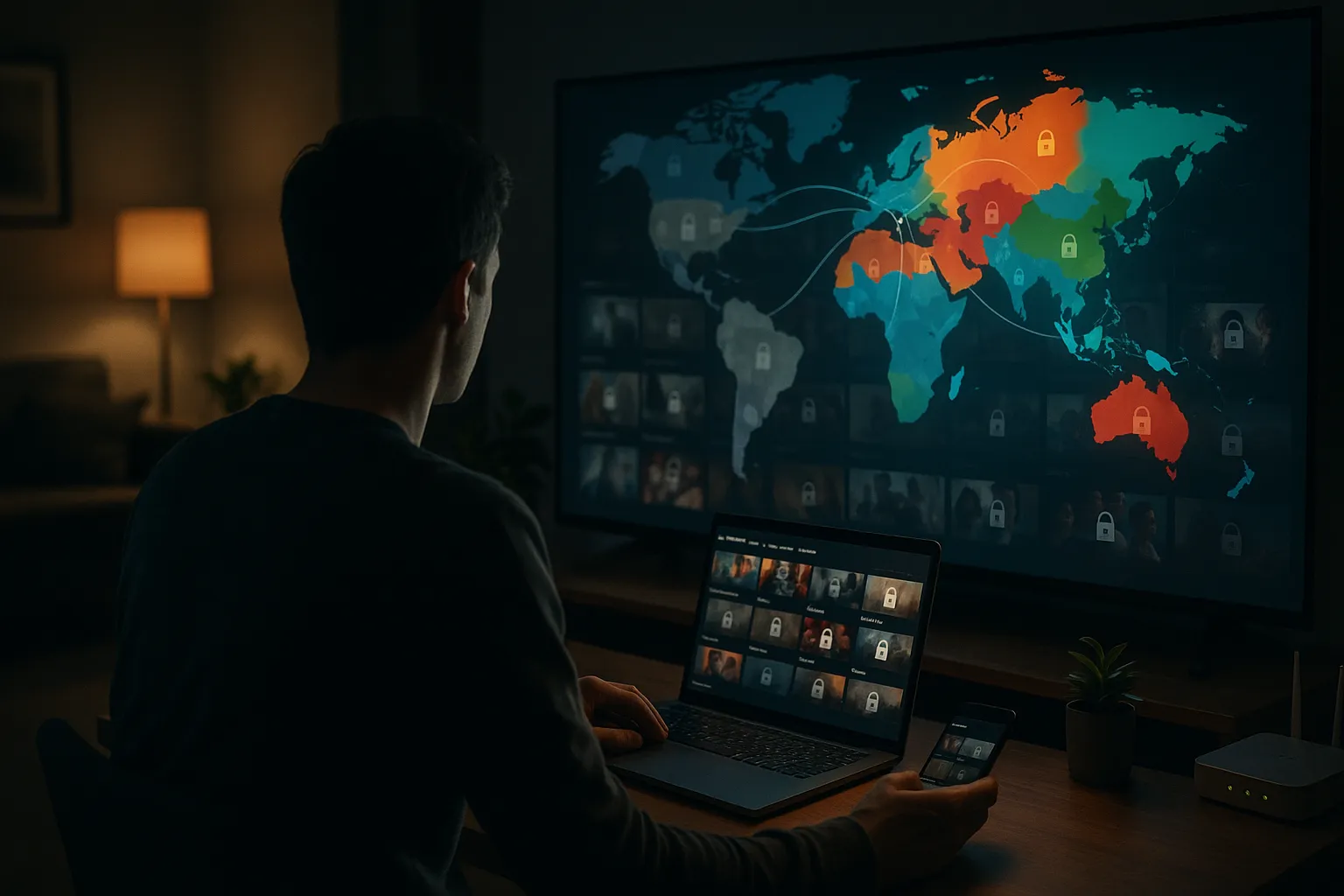
What regional restrictions on streaming actually mean
Regional catalogs vs. global platforms
Even though many streaming services operate worldwide, their libraries are not the same in every country. Each region gets its own catalog of movies, series, and live channels.
When you log in, the service checks where you are and then:
- Shows you the catalog licensed for your country
- Hides titles that are not licensed there
- Sometimes changes audio and subtitle options
This is why a show available in the US might be missing in the UK, and vice versa.
Geo-blocking in simple terms
Geo-blocking is the technical method used to enforce these regional rules. It is the process of allowing or denying access to content based on your geographic location.
In practice, geo-blocking can mean:
- Blocking the entire service in a country
- Blocking specific titles or live streams
- Changing prices or subscription options by region
Why this matters for everyday users
Understanding why streaming services restrict content by region helps you set realistic expectations. It also explains why using tools like VPNs might change what you can see, and why platforms sometimes react strongly against that behavior.
Why streaming services restrict content by region
Licensing and copyright agreements
The biggest reason for regional restrictions is licensing. Content owners, such as movie studios and TV networks, sell rights to their shows and films in separate markets.
They may choose to:
- Sell exclusive rights to different platforms in different countries
- Limit how long a title can be available in a region
- Release content later in some markets to match cinema schedules
If a platform only bought rights for a specific country, it is legally obliged to block access from other regions.
Business strategy and pricing differences
Streaming services also use regional restrictions as part of their business strategy. Prices and plans can vary widely between countries due to:
- Local income levels and willingness to pay
- Competition from other local or regional services
- Taxes, regulations, and operational costs
By controlling where content is available, they can tailor offers to each market instead of running a single global model.
Local laws, censorship, and regulations
Some countries restrict certain types of content for legal or cultural reasons. Streaming services must comply with local regulations to operate there.
This can include:
- Age restrictions and content ratings
- Political or religious content rules
- Requirements to show a certain amount of local content
Geo-blocking makes it possible to follow these rules in one country without changing the catalog for everyone else.
How geo-blocking works behind the scenes
IP addresses and location detection
The main way streaming services detect your region is through your IP address. An IP address is a unique number assigned to your device when it connects to the internet. Blocks of IP addresses are allocated to internet providers in specific countries.
When you press play, the platform:
- Reads your IP address
- Looks up the country associated with it in a database
- Applies regional rules to decide what you can watch
This process is usually automated and happens in milliseconds.
Other signals streaming services may use
Because IP-based detection is not perfect, some platforms use additional signals to confirm your location, such as:
- GPS data on mobile devices (if you allow it)
- Payment method country and billing address
- Language and region settings on your device or account
- Previous login locations and account behavior
Combining these signals helps services detect unusual activity, such as frequent changes of region.
Why some IPs get blocked or flagged
When many users appear to stream from the same IP address range, it may belong to a VPN, proxy, or data center. Streaming services often maintain lists of such IP ranges and block or limit them to enforce licensing agreements.
This is why a VPN server might work one day and fail the next: its IP range may have been added to a blocklist.
How regional restrictions affect viewers
Content availability and FOMO
Regional licensing creates a fragmented viewing experience. You might see:
- Popular shows trending online but unavailable in your country
- Different release dates for the same series in different regions
- Incomplete seasons or missing episodes in your local catalog
This can be frustrating, especially when you are trying to follow global conversations around major releases.
Travel, relocation, and account access
Regional rules can also affect you when you travel or move abroad.
- On short trips, you usually keep access to your account, but the catalog switches to the local version.
- Some services may limit access to your home region content after a certain time abroad.
- Payment methods from one country might not work if you try to sign up in another region.
Pros and cons of regional restrictions for users
Potential benefits:
- More local content that matches regional tastes
- Localized subtitles and audio tracks
- Occasionally lower prices in some markets
Clear downsides:
- Unequal access to the global catalog
- Confusing availability when traveling
- Extra steps if you want to watch content from multiple regions
VPNs, regional restrictions, and privacy considerations
How VPNs interact with streaming geo-blocks
A VPN (Virtual Private Network) routes your traffic through an encrypted tunnel and assigns you an IP address from its server location. To streaming platforms, that often looks like you are connecting from the VPN server country instead of your actual location.
This can result in:
- Access to a different regional catalog, depending on the server location
- Occasional error messages if the service detects VPN traffic
- Frequent switching between working and blocked servers
Streaming platforms actively try to limit this behavior to comply with licensing obligations.
Privacy and security implications
Using a VPN for streaming has both privacy and security aspects:
- Privacy: A VPN can hide your real IP address from the streaming service and your internet provider, which reduces straightforward tracking based on your IP. However, the service still knows who you are through your account, device IDs, and usage patterns.
- Security: The encrypted tunnel helps protect your data on untrusted networks, such as public Wi-Fi in hotels or airports, which is especially useful when streaming while traveling.
- Limitations: A VPN does not make you completely anonymous and does not replace careful account security, strong passwords, or safe browsing habits.
Performance and speed trade-offs
Because VPN traffic is encrypted and routed through extra servers, you may notice:
- Lower maximum speeds compared to your raw connection
- Higher latency, which can affect live sports or interactive content
- Buffering if the VPN server is overloaded or far away
Some VPNs offer streaming-optimized servers to reduce these issues, but performance still depends on your own connection and distance to the server.
Practical tips, best practices, and quick FAQs
Staying on the right side of terms and laws
Before trying to bypass regional restrictions, it is important to understand:
- Most streaming platforms prohibit using VPNs or proxies to access other regions in their terms of service.
- Licensing rules are binding for the platform, and they may respond with blocks or account warnings if they detect violations.
- Local laws in your country may also regulate how you can access copyrighted content.
Always review the terms of the service you use and follow local regulations.
Smart habits for safer streaming
Whether you use a VPN or not, good streaming hygiene improves your privacy and security:
- Enable two-factor authentication on your streaming accounts.
- Use strong, unique passwords for each service.
- Be cautious of unofficial apps, add-ons, and "free streaming" sites, which often carry malware or tracking.
- Regularly review connected devices and sign out from ones you no longer use.
FAQs about why streaming services restrict content by region
Is geo-blocking only about money?
No. Business strategy is a major factor, but local laws, censorship, and existing broadcast deals also play a big role.
Will streaming ever be truly global?
Some platforms are moving toward more global rights, especially for their own original content. However, for many movies and licensed shows, region-by-region deals are likely to continue for the foreseeable future.
Does a VPN guarantee access to any region?
No. A VPN may help you appear to be in another country, but streaming services constantly update their detection systems. Access can change at any time, and a VPN does not override licensing rules or service terms.
Conclusion: Understanding why streaming services restrict content by region makes the streaming landscape less confusing. Licensing, local laws, and business decisions drive these limits, while geo-blocking and IP detection enforce them. Tools like VPNs can sometimes change what you see, but they come with technical, legal, and performance trade-offs. For a safer and more private experience, combine any technical tools you use with careful account security and responsible streaming habits.