
What Is VPN Encryption and Why Does It Matter?
VPN encryption is one of those terms you see on every VPN website, but it is rarely explained in a clear, practical way. If you have ever wondered what is actually happening to your data when you click "connect," you are in the right place.
This guide explains what VPN encryption is, why it matters for your privacy and security, and how to use it wisely without falling for marketing hype. You do not need to be a tech expert to follow along.
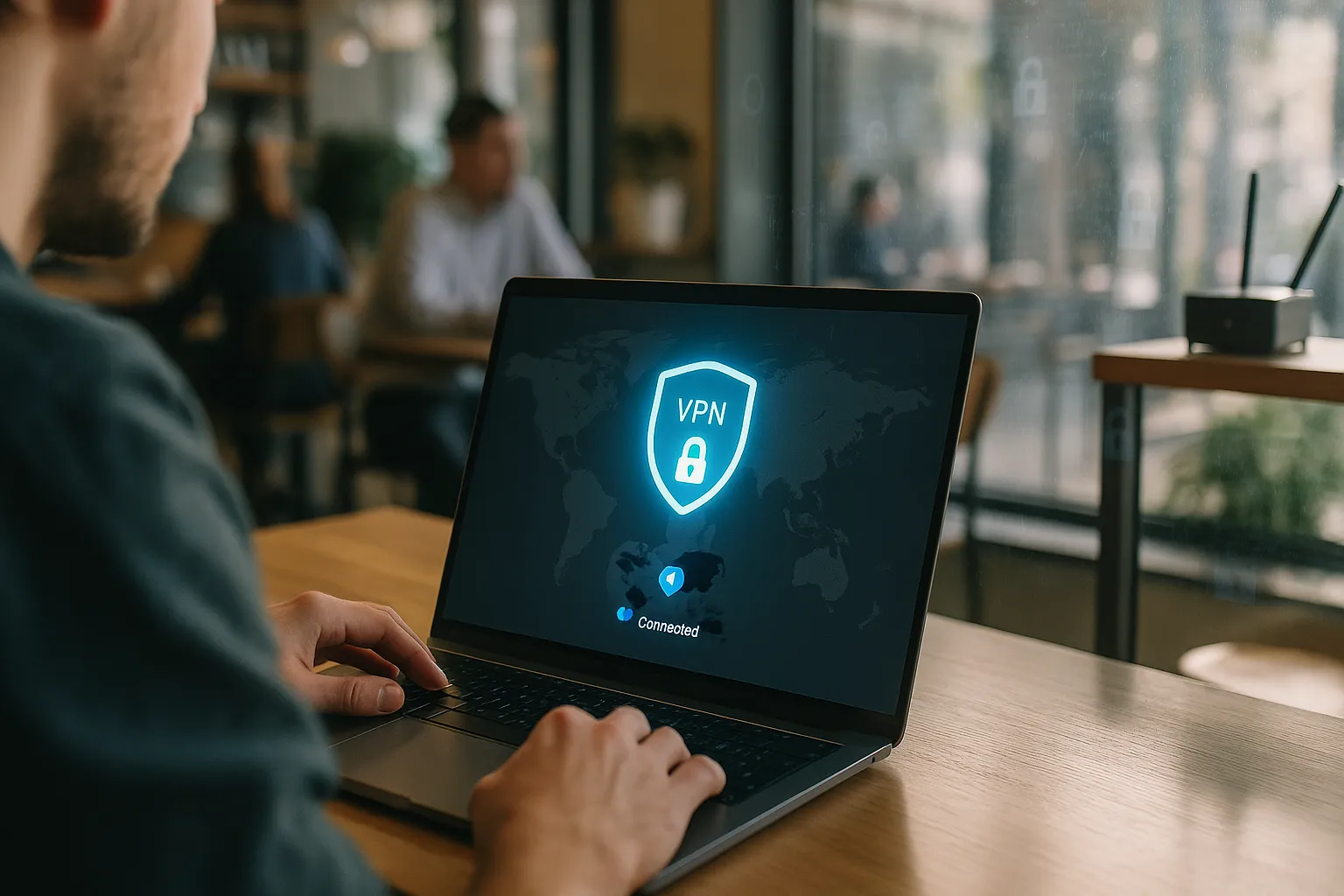
What is VPN encryption in simple terms?
Encryption explained like a locked envelope
Encryption is a way of scrambling data so that only someone with the right key can read it. Think of it as placing your message in a locked envelope that only the intended recipient can open.
When you use a VPN, your internet traffic is put into this "locked envelope" before it leaves your device. Anyone who intercepts it—such as your Wi-Fi provider, a hacker on public Wi-Fi, or some network admin along the way—will see only unreadable gibberish instead of your browsing activity.
What VPN encryption actually protects
VPN encryption mainly protects:
- Your data in transit — information moving between your device and the VPN server.
- What others can see on the network — your visited domains, apps, and services are hidden from local observers.
- Some identifying details — your IP address is replaced by the VPN server's IP, improving privacy.
Encryption does not erase your identity, your online accounts, or your behavior. Websites you log in to can still know who you are, and your device can still be compromised if you install malware or share too much information.
Why VPN encryption matters today
More of your life now passes through the internet: banking, messaging, work files, and personal photos. Without encryption, many of these data streams can be monitored, logged, or tampered with by others on the path.
VPN encryption adds an extra protective layer on top of other tools like HTTPS and secure messaging apps. It reduces how much your internet provider, local network owner, or casual snooper can learn about what you do online.
How VPN encryption works behind the scenes
The VPN tunnel and encrypted packets
When you connect to a VPN, your device creates an encrypted tunnel to a VPN server. All your internet traffic is wrapped in encrypted packets and sent through this tunnel.
From a technical perspective, this involves two main steps:
- Key exchange — your device and the VPN server securely agree on encryption keys.
- Data encryption — your traffic is encrypted with those keys using an algorithm (cipher) such as AES or ChaCha20.
The VPN server then decrypts your traffic and forwards it to the final destination (like a website). Responses come back to the VPN server, get re-encrypted, and are sent through the tunnel to your device.
Common VPN encryption standards
Good VPN services typically use strong, modern encryption standards, for example:
- AES-256 — widely used symmetric cipher considered very strong for consumer use.
- ChaCha20 — efficient cipher often paired with the WireGuard protocol, good for mobile and lower-power devices.
- Perfect Forward Secrecy (PFS) — uses temporary keys so that even if one session key is exposed, past sessions remain protected.
For most users, the specific cipher name matters less than choosing a reputable VPN provider that uses modern protocols and keeps its software updated.
VPN protocols and their impact on speed
Encryption is implemented through VPN protocols. Common ones include:
- OpenVPN — mature, open source, secure; can be slightly slower on some devices.
- WireGuard — modern, lightweight, very fast; uses strong, streamlined encryption.
- IKEv2/IPsec — often used on mobile; good at reconnecting when switching networks.
Stronger encryption does require processing power. On older devices or slow routers, this can reduce speed. Modern protocols like WireGuard are designed to keep strong encryption while minimizing the impact on performance.
Benefits and limitations of VPN encryption
Key privacy and security benefits
VPN encryption can significantly improve your online privacy and security in several ways:
- Protection on public Wi-Fi — prevents local snoopers from intercepting your traffic on hotel, airport, or cafe networks.
- Reduced ISP tracking — your internet provider sees that you are connected to a VPN, but not the specific sites or services you access through it.
- Less exposure to local network monitoring — helpful in shared housing, workplaces, or student accommodation.
- Safer remote work — encrypts company data when accessing internal tools or cloud services from outside the office.
Important limitations to understand
Despite its benefits, VPN encryption is not a magic shield. It has clear limits:
- Websites and apps you log into still know you — if you sign in to social media or email, those services can still track your activity within their platforms.
- Malware can bypass encryption — if your device is infected, malicious software can send data out regardless of the VPN.
- Some data may still be logged — depending on the provider's policies and local regulations, certain connection details may be stored.
- End-point visibility — the VPN server can technically see your traffic after decryption, similar to how your ISP would without a VPN.
This is why choosing a trustworthy VPN provider and practicing safe browsing habits are just as important as the encryption itself.
Pros and cons of relying on VPN encryption
- Pros
- Greatly improves privacy on untrusted networks.
- Helps bypass some local restrictions and throttling.
- Adds a strong extra layer on top of HTTPS and app-level security.
- Cons
- Can reduce speed or increase latency, especially with distant servers.
- Does not fix unsafe user behavior or weak passwords.
- Requires trust in the VPN provider instead of your ISP.
Real-world situations where VPN encryption matters
Using public Wi-Fi safely
Public Wi-Fi networks are often poorly secured. Without VPN encryption, other people on the same network or the hotspot owner could potentially:
- See which websites you visit (especially if not using HTTPS).
- Capture unencrypted login details or session cookies.
- Monitor unprotected app traffic.
With a VPN enabled, your traffic is encrypted before it leaves your device, making it far harder for attackers on the same network to see or tamper with your data.
Working remotely and accessing company resources
Many businesses require employees to use a VPN to reach internal systems. In this context, VPN encryption:
- Protects confidential documents and emails in transit.
- Reduces the risk of data leaks when staff work from home or while traveling.
- Helps meet compliance requirements for handling sensitive information.
If you use a personal VPN for remote work, it is still wise to follow your employer's security policies and any official corporate VPN requirements.
Everyday privacy at home
Even on your home connection, VPN encryption can be useful:
- It makes it harder for your ISP to build detailed profiles of your browsing habits.
- It can help avoid some forms of targeted throttling (for example, when streaming or using certain services).
- It adds a safety net if a device accidentally connects to a less secure network nearby.
However, you should combine VPN use with other privacy practices, such as using privacy-respecting browsers, limiting tracking cookies, and reviewing app permissions.
Best practices for using VPN encryption safely
Choosing the right VPN settings
To get the most from VPN encryption, check and adjust your settings:
- Use modern protocols — choose WireGuard, OpenVPN, or IKEv2 over outdated options like PPTP.
- Enable the kill switch — this blocks traffic if the VPN connection drops, preventing unencrypted leaks.
- Turn on auto-connect — especially useful on mobile devices when moving between networks.
- Avoid weak cipher options — stick to defaults recommended by the provider rather than older or experimental settings.
Combining VPN encryption with other security tools
VPN encryption should be part of a broader security and privacy strategy, not your only defense. Consider also using:
- HTTPS everywhere — always prefer secure (https://) websites.
- Password managers — create strong, unique passwords for each account.
- Multi-factor authentication (MFA) — adds an extra step to logins, even if a password is stolen.
- Updated antivirus and system software — reduces the risk of malware that could bypass your VPN.
Common mistakes to avoid
Even with strong VPN encryption, these mistakes can undermine your privacy:
- Trusting any free VPN — some free services log and sell user data or use weak encryption.
- Assuming total anonymity — a VPN improves privacy but does not make you invisible online.
- Leaving accounts permanently logged in — services can still track you by your account, not just your IP.
- Ignoring device security — using outdated software or unsafe downloads can expose you despite the VPN.
VPN encryption FAQs and final thoughts
Is VPN encryption always necessary?
You may not need a VPN for every single online action, but it is very helpful whenever:
- You connect to public or shared Wi-Fi.
- You handle sensitive data outside trusted networks.
- You want to limit how much your ISP or local network can see.
Keeping your VPN on by default is a simple habit that offers consistent protection with minimal effort.
Can websites still track me if I use VPN encryption?
Yes, to a degree. Websites and apps can track you using:
- Your account logins.
- Cookies and tracking scripts.
- Browser fingerprinting techniques.
VPN encryption mainly hides your traffic from outsiders on the network path and changes your IP address. It does not automatically block all trackers or replace privacy-friendly browsing habits.
Conclusion: why VPN encryption matters but is not enough on its own
Understanding what VPN encryption is and why it matters helps you make smarter choices about your online privacy. By encrypting your data in transit and routing it through a secure tunnel, a VPN makes it much harder for local snoopers, untrusted Wi-Fi owners, and your internet provider to see what you are doing online.
At the same time, VPN encryption is only one piece of the puzzle. It works best when combined with secure websites, strong passwords, updated devices, and thoughtful sharing habits. Used correctly, a VPN is a powerful tool to improve your privacy and security, but it should never be your only line of defense.